Tearing down a house, a shed or a commercial building in the Tampa area is not just a matter of hiring a crew. Before any wall comes down, the project usually needs a demolition permit, utility approvals and, in some cases, an asbestos notice. This guide explains the general steps in the City of Tampa and Hillsborough County, how residential and commercial demolition differ, and what to expect once the work starts. Rules change and vary by address, so always confirm with the permitting office for your property.
Which Rules Apply to Your Address?
In the Tampa area, your permit depends on where the property sits. The City of Tampa’s Construction Services office handles permits inside city limits, while Hillsborough County’s permitting staff handle projects under county jurisdiction. Their checklists are similar but not identical, so start by finding out which one applies to your address. If you are not sure, call City of Tampa Construction Services at 813-274-3100, option 1, or email Hillsborough County at Permitting@HCFL.gov.
Do You Need a Demolition Permit?
In the City of Tampa, a demolition permit is required for the demolition of any existing structure and the associated debris removal. The City’s examples of work that uses the demolition application include:
- Demolishing a house
- Demolishing and removing a pool or deck
- Demolishing and removing a shed larger than 150 square feet
There are a few exemptions. Residential sheds of 150 square feet or less do not require a permit. A pool does not need one if the pool decking remains, holes are punched into the concrete bottom and the pool is filled with dirt.
Partial or exploratory demolition is handled differently. The City says to use a Building Alterations permit application for that work, not the demolition application.
Residential vs. Commercial Demolition in Tampa
The City treats residential and commercial projects as two categories. Residential covers single-family homes and duplexes. Commercial covers condominiums, triplexes, multi-family apartments, businesses of all types and mixed-use structures.
The main difference on paper is the site plan. Tampa requires a site plan for all commercial demolition. Asbestos notification also applies to commercial structures in Hillsborough County, as covered below.
Utility Sign-Offs and Other Approvals
Both offices ask for utility approvals as part of the demolition application.
City of Tampa: the Demolition Sign-off Form lists electric and gas sign-offs as required, with Tampa Electric for electric and TECO Peoples Gas for gas. Sign-offs from the City’s water and wastewater departments are no longer separate steps. The process is built into the online permit record. Structures over 50 years old also go through Architectural Review and Historic Preservation, which is likewise part of the permit record now.
Hillsborough County: the County’s residential checklist asks for these items:
- An application through the HillsGovHub portal
- A recorded, certified copy of a Notice of Commencement, required before the first inspection
- An Owner Builder Disclosure Statement if the homeowner is acting as their own contractor
- Sign-offs from Hillsborough County Public Utilities, Tampa Electric, the gas provider and the phone or data provider
- A digital key site plan, drawn to scale, showing the whole parcel and the structure to be demolished
For commercial demolition, the County also requires the Environmental Protection Commission (EPC) asbestos project information form with the application. It also asks you to make sure water and wastewater services are capped and secured on site, and the site plan must show safeguards required by Florida Building Code Chapter 33. If the property has a septic system, contact the Florida Department of Health about abandoning it.
Asbestos Notification
Florida Building Code Section 105.9 requires every demolition or renovation permit to carry an asbestos notification statement. It points the owner or operator to their duty under Section 469.003 of the Florida Statutes to notify the Florida Department of Environmental Protection (DEP) when asbestos removal applies.
In Hillsborough County, the EPC says an owner or operator planning to renovate or demolish a commercial structure, more than one single-family home, or a multi-residential structure with more than four dwelling units must notify the EPC. The notice is due at least 10 working days before the scheduled start date. Florida DEP’s own rule is the same on timing: the Notice of Renovation or Demolition must be received at least 10 working days before the project start date, counted from the demolition start date.
Whether your project is covered depends on the building and the scope of work, so ask the EPC at (813) 627-2600 before you schedule.
What to Expect on Demolition Day and After
Once approvals are in place, the City of Tampa says an inspection must be called in when the site is ready, before demolition begins. Then the work happens: the structure comes down and the debris has to go somewhere.
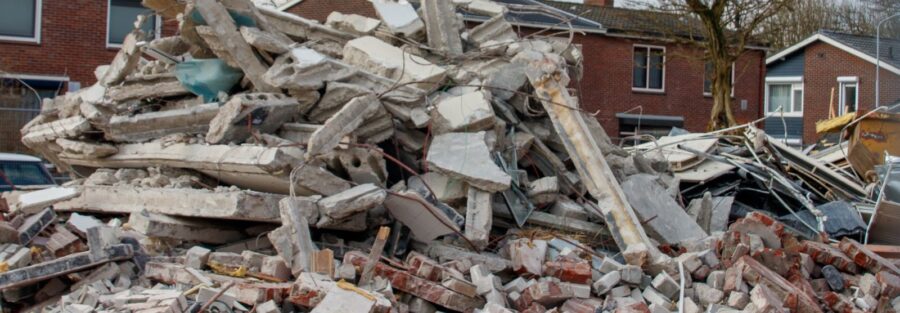
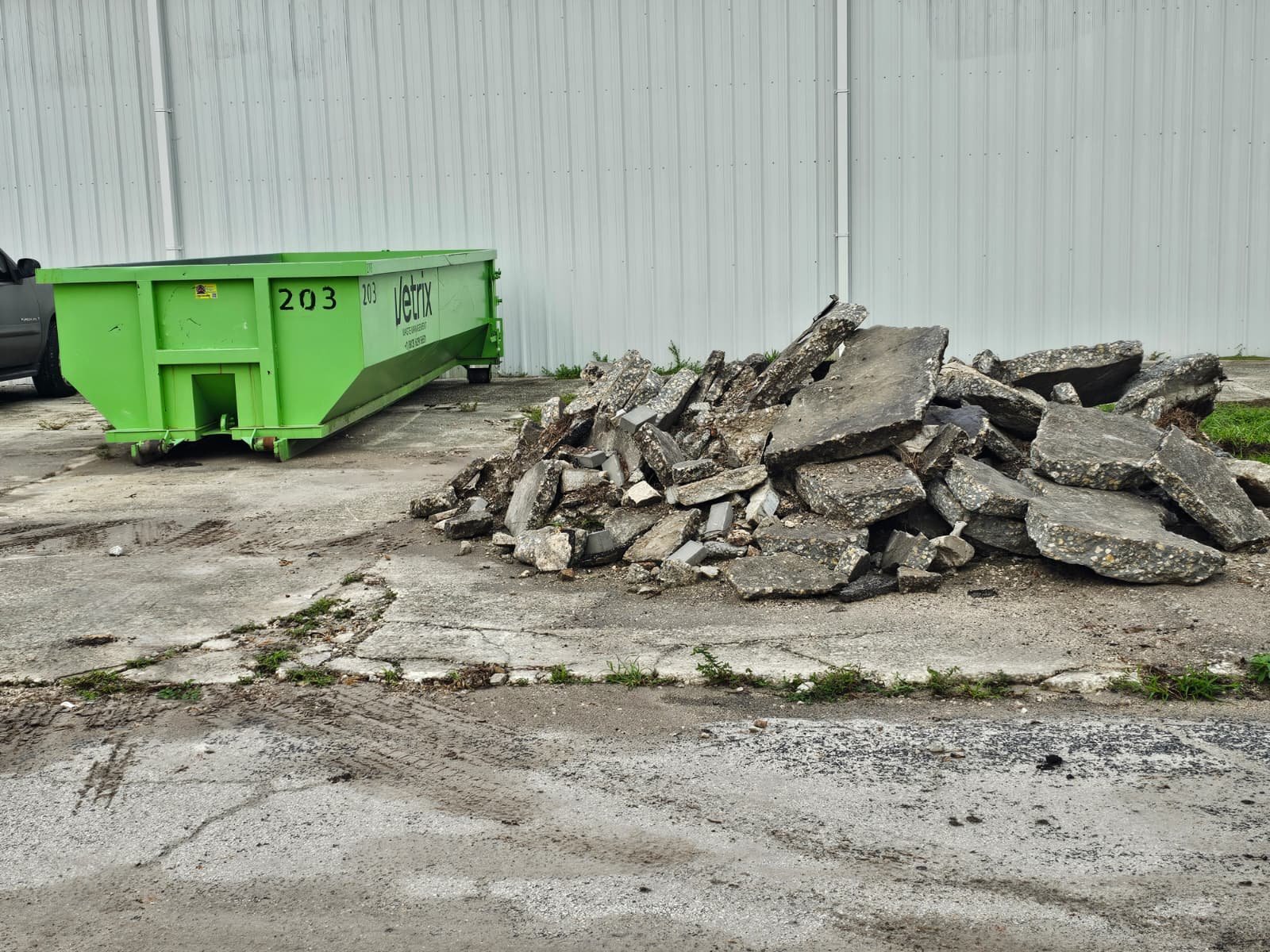
Florida defines construction and demolition debris as materials such as steel, glass, brick, concrete, asphalt roofing material, pipe, gypsum wallboard and lumber. Vetrix’s demolition page lists residential and commercial demolition with waste removal included, and we also rent roll-off dumpsters for the debris from your own project. Our 40-yard is the largest size, suited to major construction, demolition and large commercial cleanups, and clean concrete, brick and block go in the 20-yard. Not sure which fits? See our guide on what size dumpster you need.
Who applies for the permit, whether the owner or a contractor, is a decision to settle before work begins. Vetrix does demolition in Hillsborough, Pinellas, Pasco, Polk, Manatee and Sarasota counties. Call us with your address and scope, and we will talk through what your project involves. You can also read about our demolition services or our dumpster rental in Tampa.
Tampa Demolition FAQ
Do I need a permit to demolish a house in Tampa?
Yes. The City of Tampa requires a demolition permit for demolishing any existing structure and the associated debris removal. A house is one of the City’s examples.
Is a permit needed to remove a shed or a pool?
It depends on the size and the method. In Tampa, residential sheds of 150 square feet or less do not need a permit, and a larger shed does use the demolition application. Pool removal also uses it, unless the pool decking stays and the pool is filled in the specific way the City describes.
Does demolition require an asbestos notice?
Sometimes. Florida DEP and the Hillsborough County EPC require advance notice for covered projects, at least 10 working days before the start date. Commercial structures, more than one single-family home and multi-residential structures with more than four dwelling units are covered in Hillsborough County. Ask the EPC about your specific property.
Do Hillsborough County and the City of Tampa have the same requirements?
They are similar but not identical. The City’s process includes things like electric and gas sign-offs and a commercial site plan, while the County lists a Notice of Commencement, a site plan and sign-offs from several utilities. Check the office that covers your address.
Talk to Vetrix About Your Demolition Project
Call Vetrix at 813-629-5651 or use our booking page. Share your address and what you plan to take down, and we will help you plan next steps.